
Minnesota Lawyer and Finance & Commerce
By Ryan Downes
The AI revolution has already crept into the legal field, and its role will undoubtedly grow as AI tools, and user proficiency, continue to improve. The transition has not been without problems. By now, most attorneys and law firms are keenly aware of the danger of AI hallucinations and the legal and reputational risk they present. In response, attorneys and firms have started creating and implementing policies regarding attorney use of AI.
But it is not just lawyers using AI to address legal problems. Clients have also started to use open-source AI tools, such as Chat GPT, Claude, Gemini, and Copilot, to act as a second opinion, provide ideas to their attorney, or in hope of reducing their attorney’s workload (and the resulting bill). Whether these tools may provide some benefit, clients often neglect to consider their risks – risks that clients, or even their lawyers, may not foresee. One of those risks is the potential disclosure or waiver of privileged communications.
Under Minnesota law, parties can obtain discovery regarding any nonprivileged matter that is relevant to any party’s claim or defense and proportional to the needs of the case. Minn. R. Civ. P. 26.02(b). A key limit on a party’s ability to obtain discovery is the attorney-client privilege.
Minnesota law requires eight criteria for a communication to be privileged: “(1)[W]here legal advice of any kind is sought (2) from a professional legal adviser in his capacity as such, (3) the communications relating to that purpose, (4) made in confidence (5) by the client, (6) are at his instance permanently protected (7) from disclosure by himself or the legal adviser, (8) except the protection be waived.” Kobluk v. Univ. of Minnesota, 574 N.W.2d 436, 440 (Minn. 1998). Courts across the country have determined, when a client uses an open-source AI model, it does not meet these criteria. More importantly, depending on the prompts, the client may unwittingly be waiving the attorney-client privilege.
That is the conclusion of one court addressing this very issue. On February 17, 2026, in United States v. Heppner addressing this very issue. 820 F. Supp 3d 292 (S.D.N.Y. 2026), the United States District Court for the Southern District of New York held that prompts entered into an open-source AI platform are not privileged. In Heppner, a criminal defendant prepared numerous documents in anticipation of his defense by submitting prompts to an open-source AI platform in connection with his criminal-fraud investigation. The court determined that the documents created by the defendant through the AI platform were not protected by attorney-client privilege because they failed to satisfy the elements necessary to establish attorney-client privilege.
The court based its conclusion on three facts. First, the defendant’s AI documents were not the product of communication between a client and his attorney. The AI platform is not an attorney, and communications with AI, even about legal matters, does not constitute an attorney-client communication. Second, the communications were not confidential. The privacy policy of the specific AI platform used, Claude, explicitly stated that the platform was collecting data from users’ inputs and reserved the right to disclose such data to third parties. Users cannot expect privacy or confidentiality in their AI inputs when the AI platform retains data in the ordinary course of its operations. Third, the defendant did not communicate with the AI platform for the purpose of obtaining legal advice. After all, Claude expressly disclaimed providing legal advice, and the defendant could not have used the AI platform to obtain what the platform said it was not providing.
Ultimately, the Heppner Court determined that the defendant could not prove the requisite elements to claim privilege over the documents. While Minnesota courts have not squarely addressed the same issue under Minnesota law, the reasoning supplied by the Heppner Court seems to align with Minnesota’s privilege protections.
Even if you are not a lawyer that is actively using open-source AI platforms in your practice, your clients may be – and they may be doing it with your own privileged documents or communications. Based on the reasoning provided in Heppner, a client prompting an open-source AI chatbot with any privileged document, communication, or other attorney-client advice is likely to lead to the waiver of the privilege that the document was afforded.
This same notion can also be used on the offensive. One precisely tailored discovery request to an opposing party that has not been warned of the risk of open-source AI platform use can unlock a bevy of critical documents that otherwise would have been protected by the attorney-client privilege.
Lawyers need to be aware of these developing decisions and take proactive steps to educate their clients as to the risks associated with frequent AI platform use in connection with legal advice. While AI platforms can provide many benefits to the legal world, attorneys must continue to stay updated on the latest developments to adequately protect their clients.
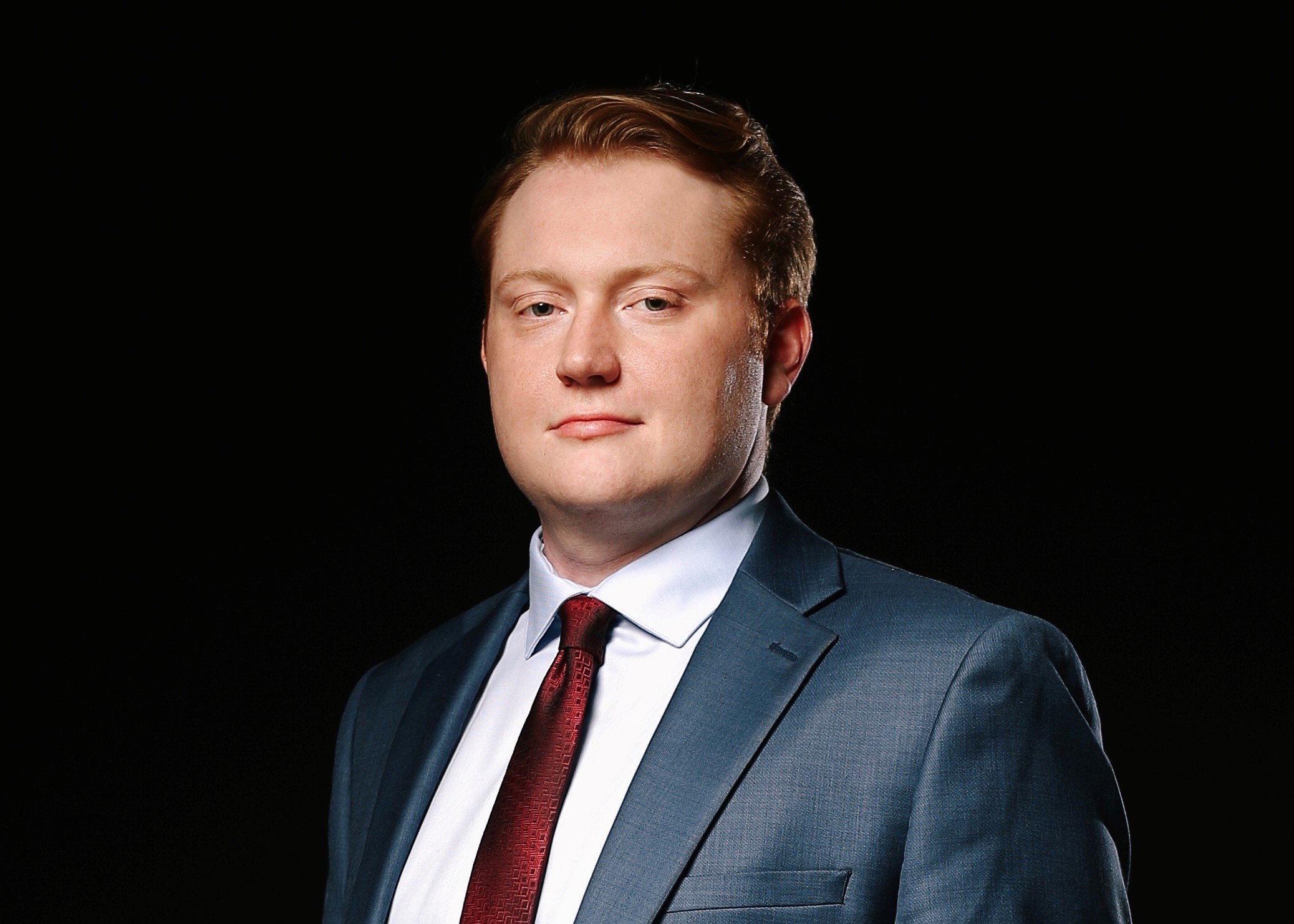
Ryan Downes is an associate at Anthony Ostlund Louwagie Dressen & Boylan P.A. in Minneapolis. Ryan represents clients of all types in litigation involving shareholder disputes, breach of contract, trusts and estate disputes, employment, fraud, breach of fiduciary duties, and other business torts.